Editor’s note: This article has been updated throughout.
The first-ever congressional hearing on menopause is coming with a request to the federal government: Evaluate how to better fund treatment and research of menopause and healthcare for middle-aged women.
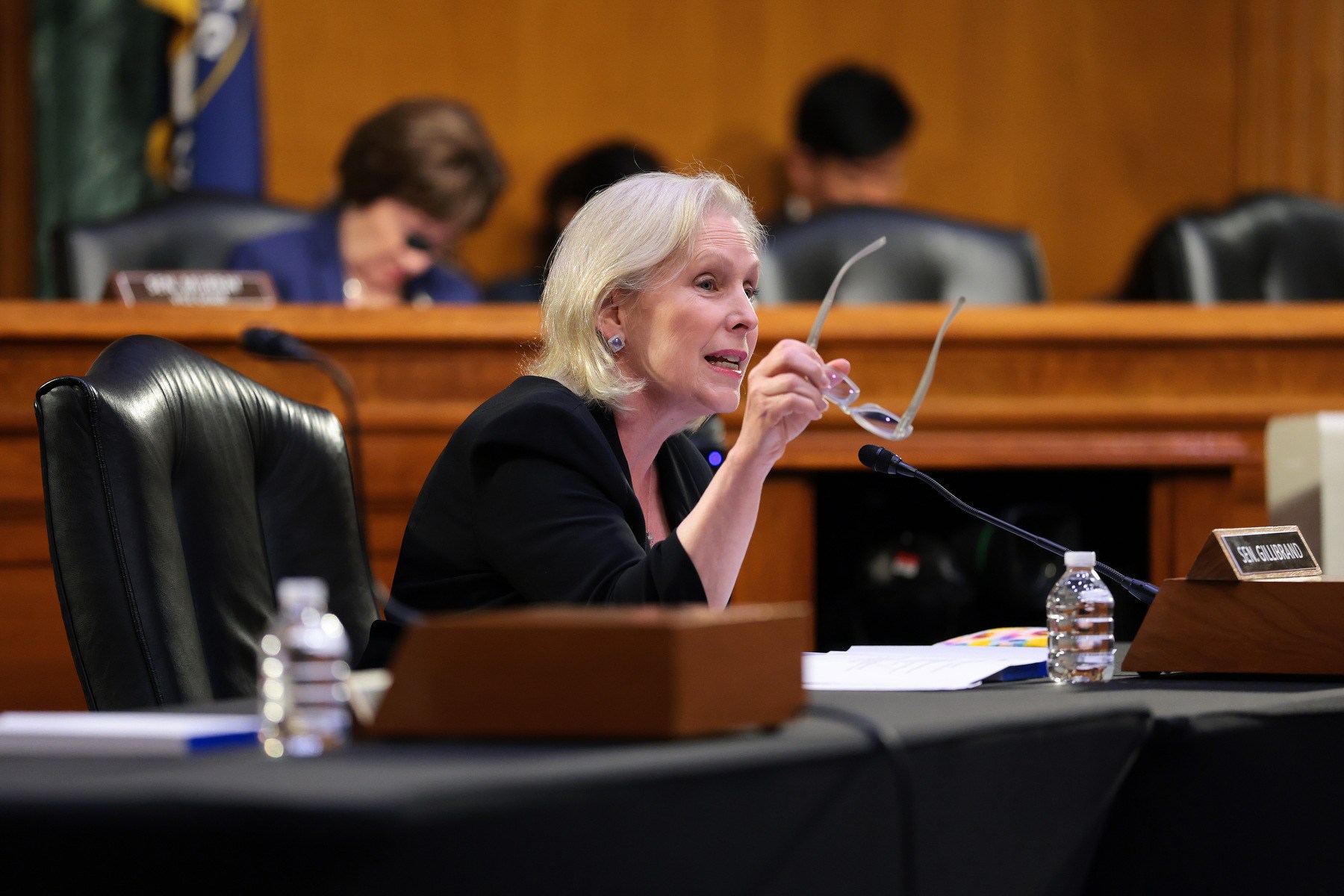
New York Sen. Kirsten Gillibrand, a Democrat who convened the Wednesday hearing, and Florida Sen. Rick Scott, a Republican, announced the request in a letter to the Government Accountability Office (GAO), which investigates how the government uses federal funds.
“Considering the importance of a rigorous health research agenda for women, we are interested in a GAO report related to menopause, with a focus on the federal government’s role in advancing research, ensuring access to evidence-based treatments, and strengthening oversight of existing programs,” reads the letter, which was also signed by Sen. Angela Alsobrooks, a Democratic from Maryland, and three Democratic women in the House.
The GAO request, Gillibrand said during the hearing, “will tell us what the federal government actually does on menopause, how well our doctors are trained and where the gaps are. You can’t fix what you refuse to even measure.”
The hearing, titled “Half the Country, Zero Hearings: Meeting the Moment to End the Menopause Care Gap in America” and held by the Senate Committee on Aging, which is chaired by Scott, focused on topics such as training physicians in caring for menopausal patients and increasing funding for research into the topic. Speakers included gynecologists and other experts who study menopause and treatment options.
“I am proud to lead the fight to get this critical healthcare issue out in the open so that we can find the best ways to improve research, training and care for women experiencing menopause,” Gillibrand said in a statement to The 19th. “I am committed to working with all of my colleagues — men and women, Democrats and Republicans — to meet the moment on menopause.”
Several of the speakers praised the Food and Drug Administration’s recent removal of the black box label on some hormone treatments but urged further research to help a more diverse range of patients. At least one speaker mentioned her own difficulty in getting insurance coverage for menopause treatments, including estrogen patches, which have faced chronic shortages.
Menopause has seen an explosion of interest in recent years. Most statehouses have considered menopause-related bills, including those that would require insurance to cover menopause treatments and expand hormone therapy coverage for state employees going through menopause. Laws have passed in states of all political stripes, including Illinois, Louisiana, Utah and California. Multiple bills are under consideration in Congress, including legislation that would increase funding for research, address medical education and provide workplace accommodations for people experiencing menopause symptoms. None are likely to pass before the November midterm elections.
Dr. Lynne Coslett-Charlton, an OBGYN in Pennsylvania, said interest in learning more about the subject has been so widespread that she was recently surprised by a patient in her mid-20s who wanted to discuss symptoms associated with perimenopause.
“‘Perimenopause has a vibe, and I want to be ready,’” Coslett-Charlton recalled her patient saying.
That attention has also come with a surge of misinformation, especially surrounding alternative treatments to manage symptoms, a fact highlighted by the witnesses.
“Menopause has become big business, and many women are turning to influencers rather than trained clinicians for advice. Much of my time is spent counseling patients about different supplements and unregulated products marketed online on different platforms,” Coslett-Charlton said.
But witnesses urged more than just symptom management. Addressing hormonal changes, they said, is vital to help prevent other health risks that older women face, including heart disease, bone loss and genitourinary syndrome of menopause, a common condition tied to the vaginal dryness many women experience in their 40s or 50s.
“Women’s health research, particularly in older women, has been underfunded. We need studies that further examine how hormonal changes across the lifespan influence healthy longevity,” said Jean Wactawski-Wende, dean of the School of Public Health and Health Professions at the University of Buffalo.
About 30 percent of women in the workforce are between the ages of 45 and 60, which is when most will experience symptoms of perimenopause and menopause. That can include hot flashes and night sweats, but also heavy bleeding, pain during sex and mood swings.
Figures range, but the RAND Corporation, a nonprofit research group, estimates that menopause symptoms result in losses of $5.4 billion annually, largely due to women retiring early or scaling back their involvement in the workforce as symptoms worsen. Gillibrand said during the hearing that “as many as one in 10 women leave the workforce because of menopause.”
“This issue has way more resonance than members of Congress or everyday voters realize,” said Jennifer Weiss-Wolf, the executive director of the Birnbaum Women’s Leadership Center at New York University’s School of Law, who testified at the hearing. She added: “I hope this hearing is part of that education.”