Skip to content Site Search

Republish This Story

* Please read before republishing *

We’re happy to make this story available to republish for free under an Attribution-NonCommercial-NoDerivatives Creative Commons license as long as you follow our republishing guidelines, which require that you credit The 19th and retain our pixel. See our full guidelines for more information.

To republish, simply copy the HTML at right, which includes our tracking pixel, all paragraph styles and hyperlinks, the author byline and credit to The 19th. Have questions? Please email partnerships@19thnews.org.

— The Editors

Loading...

Modal Gallery

/
Sign up for our newsletter

Menu

Home

We’re an independent, nonprofit newsroom reporting on gender, politics, policy and power. Read our story.

Topics

  • Politics
  • LGBTQ+
  • Health
  • Justice
  • Caregiving
  • Education
  • Abortion
View all topics

Daily Newsletter

A smart, relatable digest of our latest stories and top news affecting women and LGBTQ+ people.

Look for a confirmation sent to

Did you mean

The email didn't go through.

or Contact us for support
  • Latest Stories
  • Our Mission
  • Our Team
  • Strategic Plan
  • Support the 19th
  • Search
  • Contact
Donate
Home

We’re an independent, nonprofit newsroom reporting on gender, politics, policy and power. Read our story.

Daily Newsletter

A smart, relatable digest of our latest stories and top news affecting women and LGBTQ+ people.

Look for a confirmation sent to

Did you mean

The email didn't go through.

or Contact us for support

Become a member

Multi-color socks with

Our new merch store is now live!

Represent the newsroom that represents you. Every purchase directly supports our nonprofit newsroom.

Shop Now

The 19th thanks our sponsors. Become one.

Justice

Violence against women and trans people is worse than previously thought, new research finds

Nearly two-thirds of women have experienced abuse from a spouse or romantic partner. The numbers are even higher for trans people.

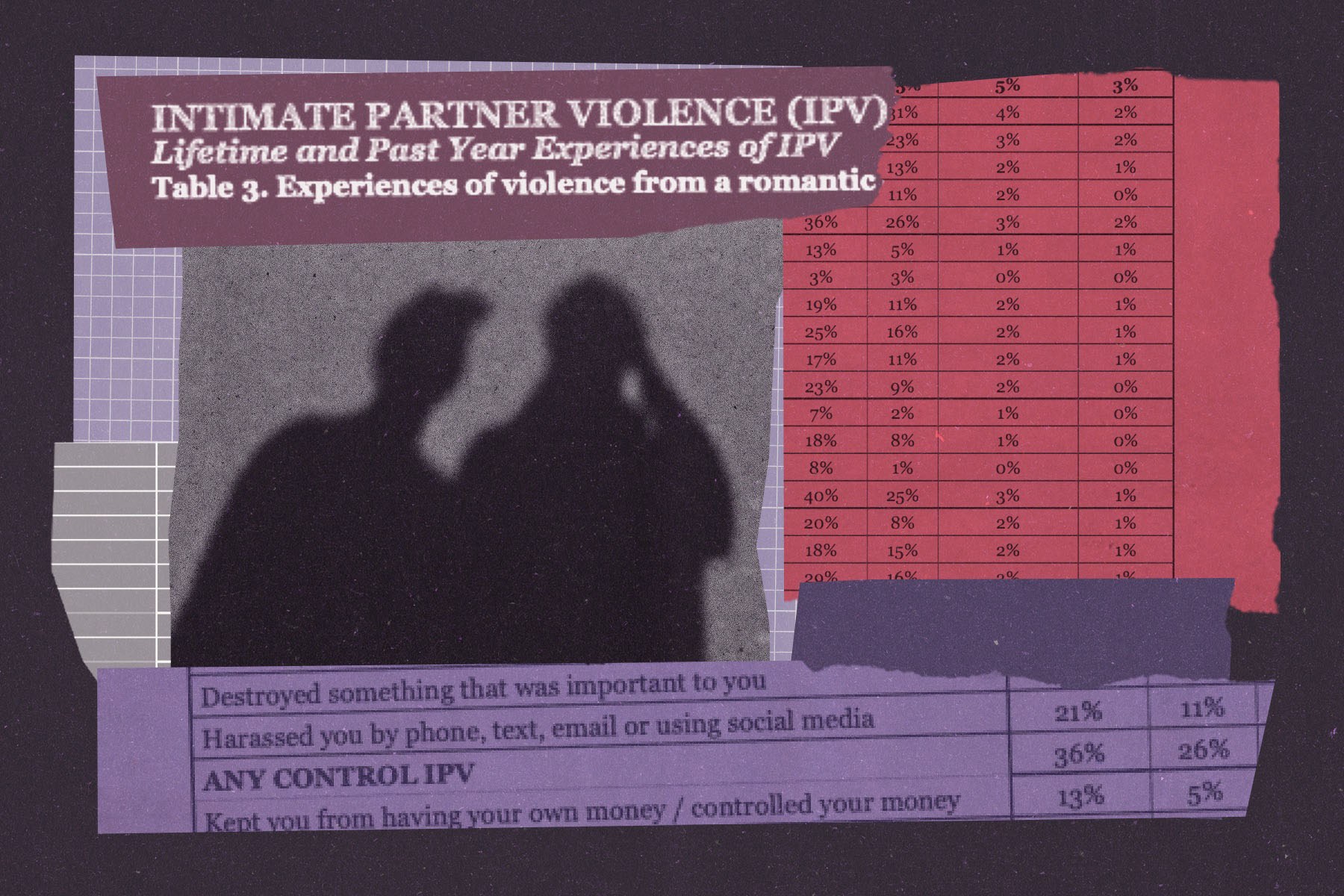
Collage featuring a blurred silhouette of a couple alongside excerpts from data tables about intimate partner violence, including statistics on harassment, controlling behavior and other forms of abuse.
(Emily Scherer for The 19th; Getty Images)

By

Jasmine Mithani, Mariel Padilla

Published

2026-09-16 06:00
6:00
September 16, 2026
am
America/Chicago

Share

  • Bluesky
  • Facebook
  • Reddit
  • Email

Violence against women and trans people is worse than previously thought, according to new research released Wednesday from Tulane University and University of California, San Diego. 

Nearly two-thirds of women have experienced abuse from a spouse or romantic partner, known as intimate partner violence or domestic violence. Sixty-eight percent reported experiences of sexual violence, including verbal or online harassment, forced sex or physically aggressive sexual harassment, according to the research report.

Anita Raj, executive director of the Newcomb Institute at Tulane University and co-leader of the research, said this is one of the most expansive assessments on violence in the United States. It is the first national view from the Violence Experiences Survey, which had previously done state-level surveys for California, Louisiana, Mississippi and Texas. 

The 19th thanks our sponsors. Become one.

“Many people bucket violence. They think in terms of community violence, family violence, domestic violence and sexual violence — not understanding that these are issues that intersect,” Raj said. 

The numbers are even higher for trans and gender-nonconforming people: 84 percent reported experiencing intimate partner violence in their lifetimes and 85 percent said they experienced sexual violence, according to the research. 

NORC at the University of Chicago, a research organization, administered the survey among a nationally representative sample of 2,720 Americans last fall. The data builds on previous studies from the Centers for Disease Control, which has historically run the largest surveys on domestic violence, sexual violence and injury. The new United States Violence Experiences Survey, however, includes questions about other common forms of violence, like controlling or coercive behavior, not usually represented in federal studies. These insights, coupled with questions about violence seen or experienced growing up, give a broader picture of what violence looks like in America today — and what is needed to actually stop it.

More from The 19th

  • Domestic violence organizations turn away thousands each day. Julia was one of them.
    A person with purple hair looks at the camera in a portrait against a snowy landscape.
  • Federal grants can save the lives of abuse victims. $200 million is sitting unspent.
  • Domestic violence groups fear survivor services could disappear without warning

The data released on Wednesday makes the case for more funding for prevention efforts, education in schools and support services, as gender-based violence is more pervasive than previously measured. But federal funding cuts have reduced services across the nation. 

President Donald Trump’s executive order defining only two genders had a chilling effect, and grants earmarked for LGBTQ+ survivors weren’t released last year. However, the need for trans-specific domestic violence services is vast and has continued to grow as organizations across the country have scrubbed resources from their sites to comply with new funding requirements from the Department of Justice, even though those have been paused by courts. 

The reorganization of the Centers for Disease Control and Prevention alongside cuts initiated by Elon Musk, the richest person in the world, during his four months of government work, gutted the federal government’s violence prevention arm last year.

Advocates have told The 19th that violence prevention is one of the most underfunded aspects of the movement to end gender-based violence, and is often the first program to be eliminated when budgets tighten. 

Raj said many people look to law enforcement as a primary solution, but she argued that’s not adequate.

“Most people don’t turn to the criminal justice system when these things happen,” Raj said. “You can’t have a criminal justice response for 50 percent of the population — that’s not going to work. We need to be building community responses. Economic responses are really key.”

She urged people to support their local legislators to fund prevention work.

While the findings of the research are “horrible,” Raj said, she underscored that most people are not abusive. Only 9 percent of Americans said they perpetrated sexual or intimate partner violence (14 percent of men and 5 percent of women), though self-reporting is an imperfect measure. The study showed those who experienced sexual or physical violence themselves were more likely to commit it, highlighting again the necessity of prevention efforts.

Raj said it would be valuable to uplift the vast majority of men who are not violent. 

“I think that there are a lot of good people out there,” Raj said, “and we need to be raising those voices higher.”

Domestic violence services remain operational across the country. Confidential, anonymous help is available 24/7 through the National Domestic Violence Hotline at (1-800-799-7233) or online. The Network/La Red (617-742-4911) runs a confidential, anonymous 24/7 domestic violence crisis line specifically for LGBTQ+ people.


Share

  • Bluesky
  • Facebook
  • Reddit
  • Email

Recommended for you

  • Collage featuring the White House, the seal of the Office of Management and Budget, U.S. currency and enlarged text from federal regulations on terminating or suspending grants.
    Domestic violence groups fear survivor services could disappear without warning
  • California’s new law aims to close a housing gap for domestic violence survivors
  • Two women embrace at the edge of the shore in Hawaii.
    Could disaster recovery include protecting women from domestic abuse and exploitation?
  • A woman wearing glasses and a denim jacket smiles down at a young girl wih braided hair adorned with blue bow barrettes, alson in a matching denim jacket, as the two share a close moment together indoors.
    Keshia said it was self defense. She goes on trial for murder next week.

Daily Newsletter

A smart, relatable digest of our latest stories and top news affecting women and LGBTQ+ people.

Look for a confirmation sent to

Did you mean

The email didn't go through.

or Contact us for support

Become a member

Explore more coverage from The 19th

  • Politics
  • LGBTQ+
  • Health
  • Justice
  • Caregiving
View all topics

Support representative journalism today.

Learn more about membership.

  • Give $19
  • Give $50
  • Give $100
  • Any amount
  • Transparency
    • About
    • Team
    • Contact
    • Privacy Policy
    • Community Guidelines
    • Gift Acceptance Policy
    • Financials
  • Newsroom
    • Latest Stories
    • Strategic Plan
    • 19th News Network
    • Events
    • Careers
    • Fellowships
  • Newsletters
    • Daily
    • The Amendment
    • Menopause
    • The Mom Guilt Economy
    • View all
  • Support
    • Ways to Give
    • Sponsorship
    • Republishing
    • Volunteer
    • Merch

The 19th is a reader-supported nonprofit news organization. Our stories are free to republish with these guidelines.