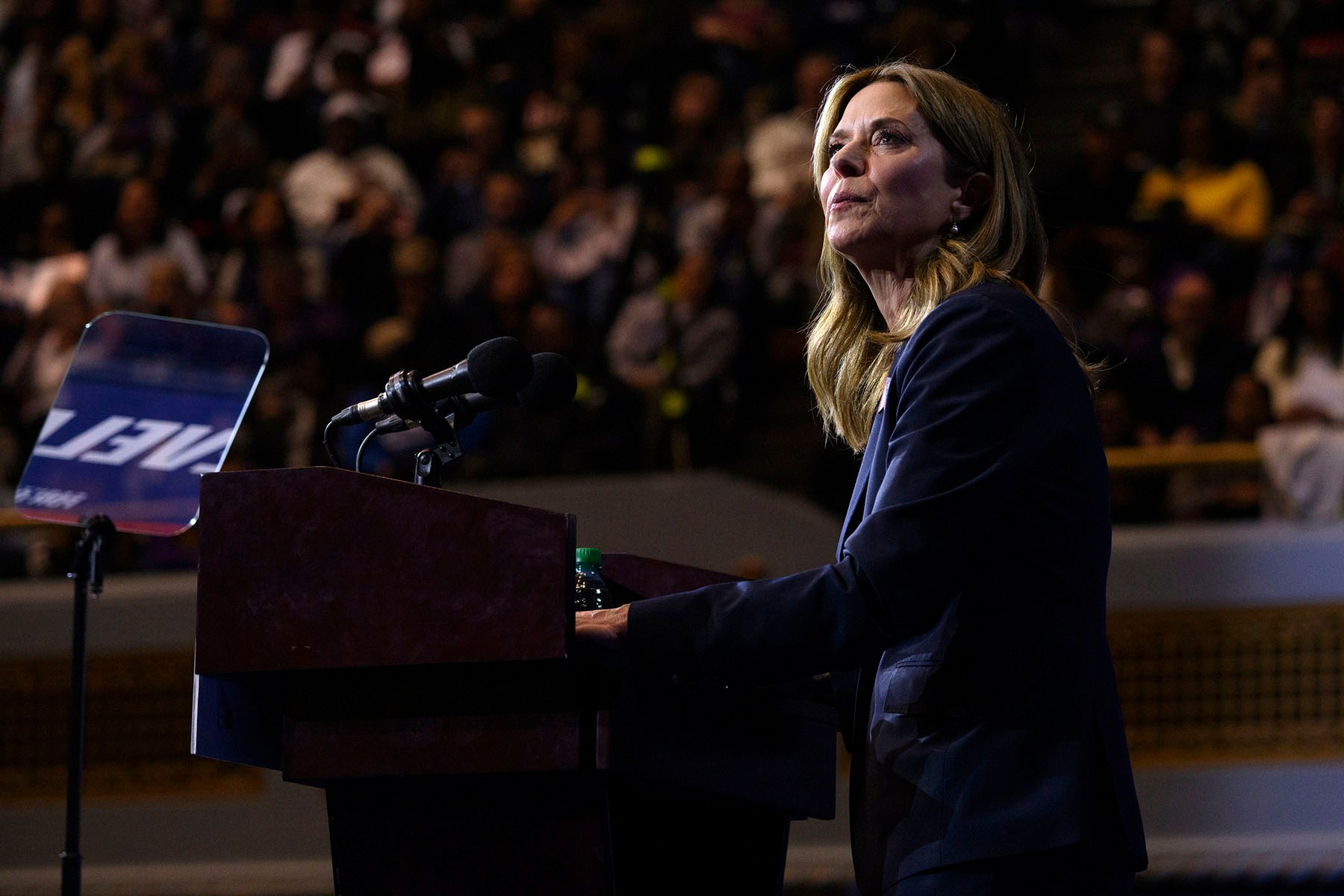

CINCINNATI — When Cindy Cromwell saw the TV ad that Republican Vivek Ramaswamy created with Democrat Dr. Amy Acton’s estranged mother saying she lied about documented childhood abuse, Cromwell’s immediate reaction was “revulsion” — but not shock.
Over the years, Cromwell, 82, has had a front-row seat to how the country treats women — and how acceptable it’s become for politicians to abuse women, engage in violence against them, or use it to their advantage, and how it never seems to be disqualifying on its own.
For 20 years, the mother of two was a clinic manager for Planned Parenthood and checked for pipe bombs before work each day. In 2016, she watched the country elect President Donald Trump weeks after an audio tape emerged in which he bragged about how “you can do anything” to women if you’re a star. She observed the lengths to which Republicans went to stymie investigations into Trump’s ties to Jeffrey Epstein after the disgraced financier’s 2019 arrest and indictment for sex trafficking minors. Then, in 2023, a jury found Trump himself liable for sexual abuse in a civil lawsuit brought by E. Jean Carroll.
So when Cromwell saw the GOP gubernatorial candidate’s ad, she thought: “This is a very calculated assault on women.”
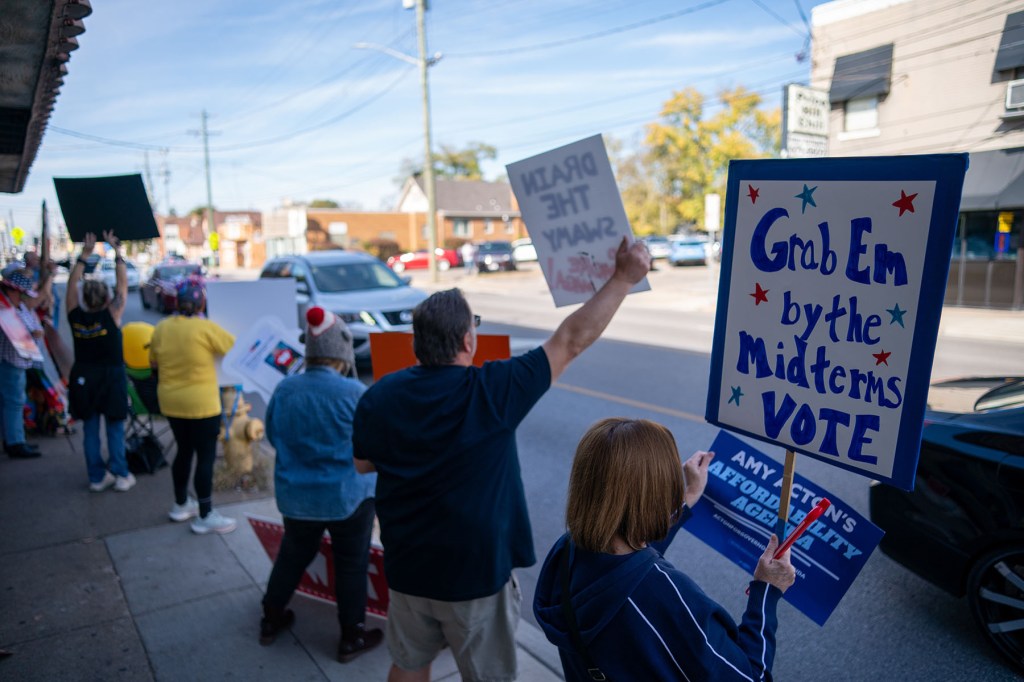
Cromwell spoke to The 19th from a weekly protest she organizes and has attended every Saturday since February 2025 at a Cincinnati-area Tesla dealership. That first snowy Saturday, it was a group of five women — they called themselves a “posse” — who met when they were precinct captains and volunteers gathering signatures for a 2023 ballot measure that Ohioans approved protecting abortion rights. Then, the group reconvened in the early days of Trump’s second presidential term to protest the cuts orchestrated by Trump’s so-called Department of Government Efficiency, or DOGE, which was initially led by Elon Musk, who owns Tesla.
“We didn’t know how long it would last,” Cromwell said. Some 20 months later, the women are still there — and their ranks have grown, with 30 or so present on that particular October Saturday. They’ve become a fixture that passing motorists anticipate as they honk their horns in support. There are fewer middle fingers these days, too.
“It’s a little bit like therapy,” said Cromwell, who wore a T-shirt supporting Acton and held two signs: “HONK” and “STAND WITH AMY.”
Cromwell, as well as most women at the protest that The 19th talked to that day, also questioned whether Acton’s birth mother, Donna Arthur, who lost custody of Acton and her brother in 1978 and has experienced periods of homelessness, was paid by the Ramaswamy campaign for the ad and therefore an even more unreliable narrator than her background would already indicate.
“When Trump made those comments, it fit with his character and a lot of what we already knew,” said Julie Moorhead, 68, a fellow organizer. “But this seems worse to me: It’s a calculated ad, and there’s a lot of money behind it.”
Two polls out this week indicate that Ramaswamy’s ad likely hurt his chances of becoming Ohio’s next governor. The pharmaceutical entrepreneur was already trailing Acton by between 4 and 9 points in most reliable nonpartisan polls in the weeks leading up to the ad’s release.
Then, a Suffolk University/USA Today poll showed that 72 percent of Ohioans had seen the ad, and among poll respondents, only one said it caused them to switch from supporting Acton to backing Ramaswamy, while seven said it prompted them to defect from Ramaswamy to Acton. A separate poll commissioned by Republicans and obtained by Axios showed that 86 percent of 800 respondents had seen, read or heard something about the ad — and those who were familiar with it were more likely to vote for Acton by a 2-to-1 ratio.
“You only do an ad like that if you’re trailing by a large margin,” Suffolk University Political Research Center Director David Paleologos told The Columbus Dispatch.
Melissa Kary Miller, a political scientist at Bowling Green State University who studies political behavior and women in politics, cautioned that the “effects of the ad itself are likely to be fairly marginal” because “no election boils down to a single ad, even an ad as outrageous and despicable as the one featuring Amy Acton’s mother.”
Early voting in Ohio started on October 6, a full week before the ad was released, so thousands of votes had already been cast by the time it was in front of voters. Plus, Miller said, this is a “textbook pocketbook-voting election, because the economic conditions are not rosy for voters today, so the pocketbook issues will still be the driver and a lot of the people who would be upset by the ad, and think that the ad is vile or inappropriate, and should be taken down, were probably already in the Acton camp or leaning that way.”
Polls have consistently shown that affordability tops the list of Ohio voters’ concerns. A separate Suffolk University/USA Today poll released this month, before the ad, found that “pessimism over the Ohio economy, negative feelings about the direction the state is heading, and disapproval of President Trump’s job performance are contributing to Ramaswamy’s uphill fight in the statewide poll.”
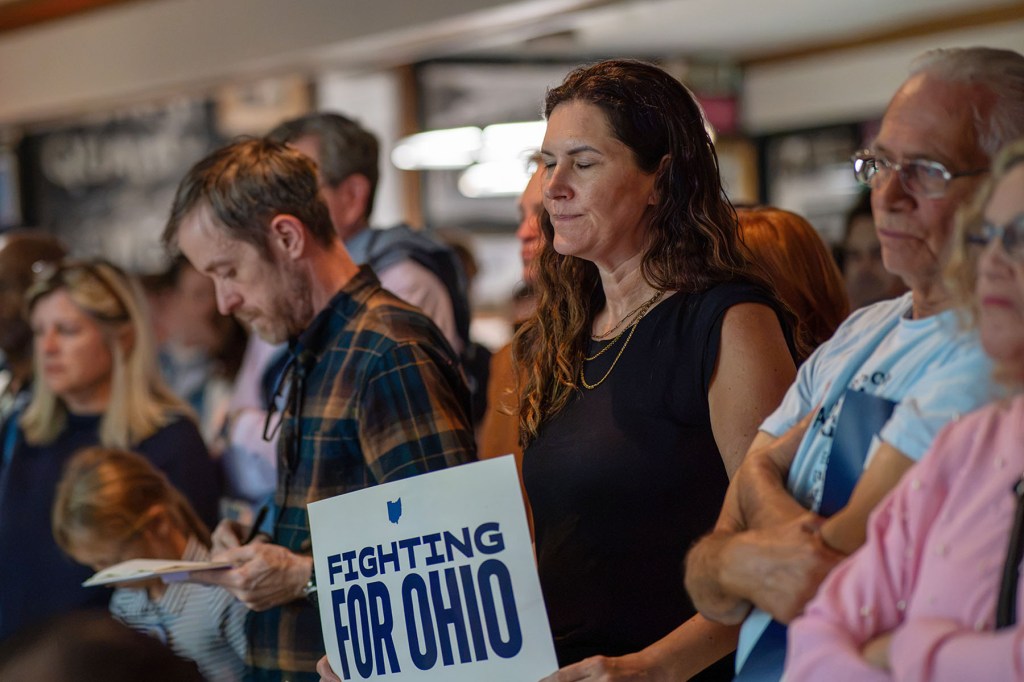
Most women in line Thursday night for a Cincinnati rally with Acton and Democratic U.S. Senate hopeful Sherrod Brown said that even before the ad’s release, they thought Ramaswamy would likely lose. Still, it has reminded them of how much women have endured in the decade since the “Access Hollywood” tape dropped ahead of Trump’s first election, and revived feelings that they shouldn’t be too hopeful that using sexual abuse against a woman is disqualifying in American politics.
Martha McGowan, 58, said the other night when she met up with friends the ad was all they could talk about. “We’ve been going through this for 10 years,” she said, adding that her Republican family members wrote someone in instead of voting for Trump in 2024 and she expected some of them would do the same for Ramaswamy this year.
“I feel like I’ve just become numb because it’s so in your face all the time,” Joan Lane, 58, lamented. She said that the Trump era — and how his circle talks about and treats women — has reenergized her political activism. “As a woman, I think I’ve shut things down for a really long time.”

Dr. Becky Lilley, 75, is a counselor who has worked with survivors of sexual abuse, including children. She knows how healing it can be for them to be believed — and how damaging it can be if they aren’t. “One of the things that hurts me terribly is women are being triggered all over the United States about not being believed, and the care providers are being triggered as well,” Lilley said.
Heidi Jost, 62, called the ad a “new low” even in the Trump era. “And the fact that they doubled down on it was even more troubling,” she said, referencing positive reactions from Trump and Vice President JD Vance, a Cincinnatian, and the Ramaswamy campaign’s move to put more than $4 million into airing it even after bipartisan public outcry.
“If everything is two steps forward, one step back, if this is our one step back, hopefully we’ll get put back to where we were [before Trump],” Jost added.
To check your voter registration status or to get more information about how to vote and what’s on your ballot, visit vote.org.