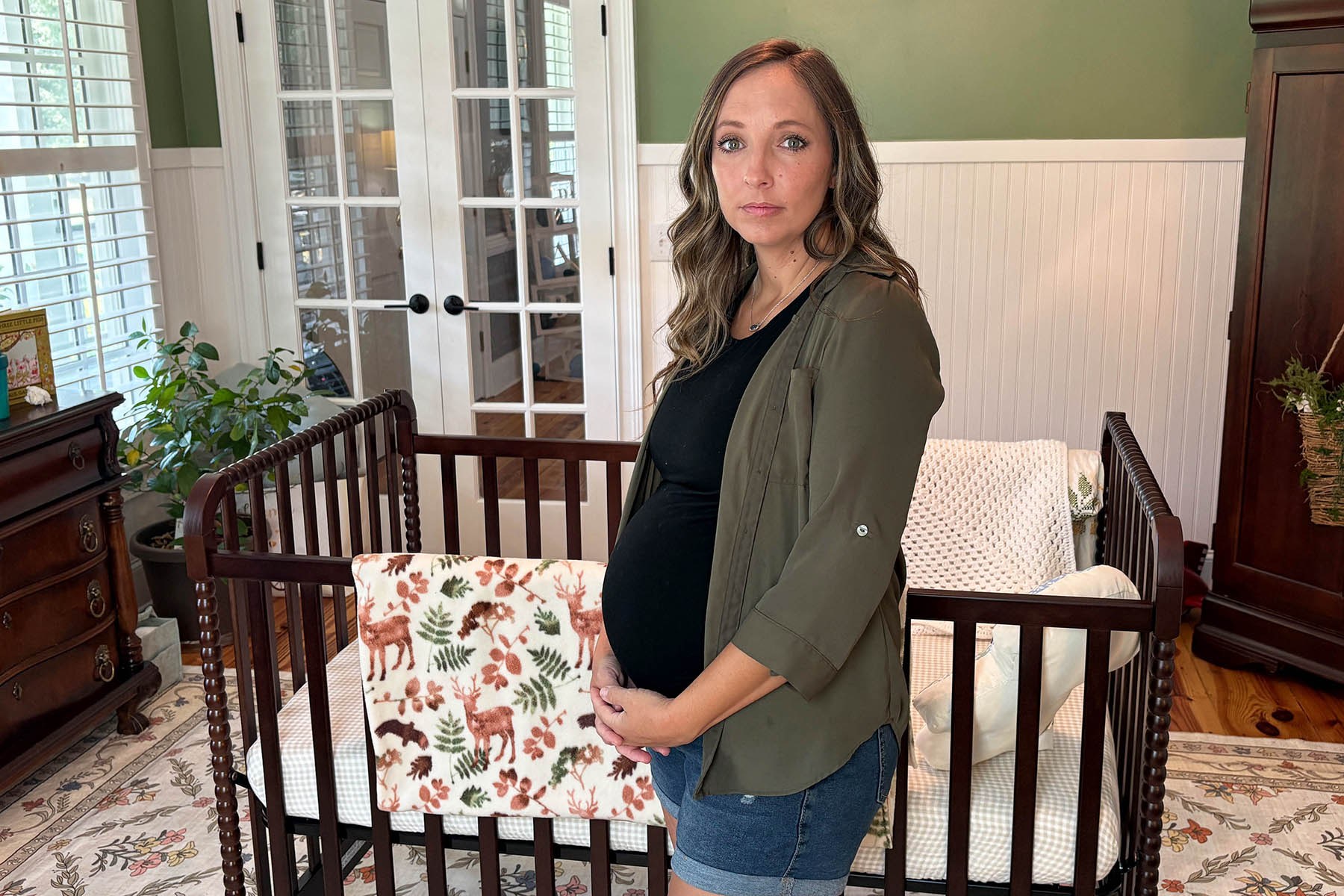
LAVONIA, Ga. — It had been a decade since Kara Holden last had a baby. But as the former obstetric nurse prepared for her fourth child, her head was swimming with contingency plans.
The labor and delivery unit where she used to work in this rural northeastern Georgia community is no longer open. So, she asked former coworkers to be on standby around her anticipated due date. She and her midwife mapped out emergency rooms along the more-than-50-mile trek to the hospital in Greenville, South Carolina, where she planned to give birth. And, to prepare for a worst-case scenario, she curated items to keep in the car in case she went into labor en route.
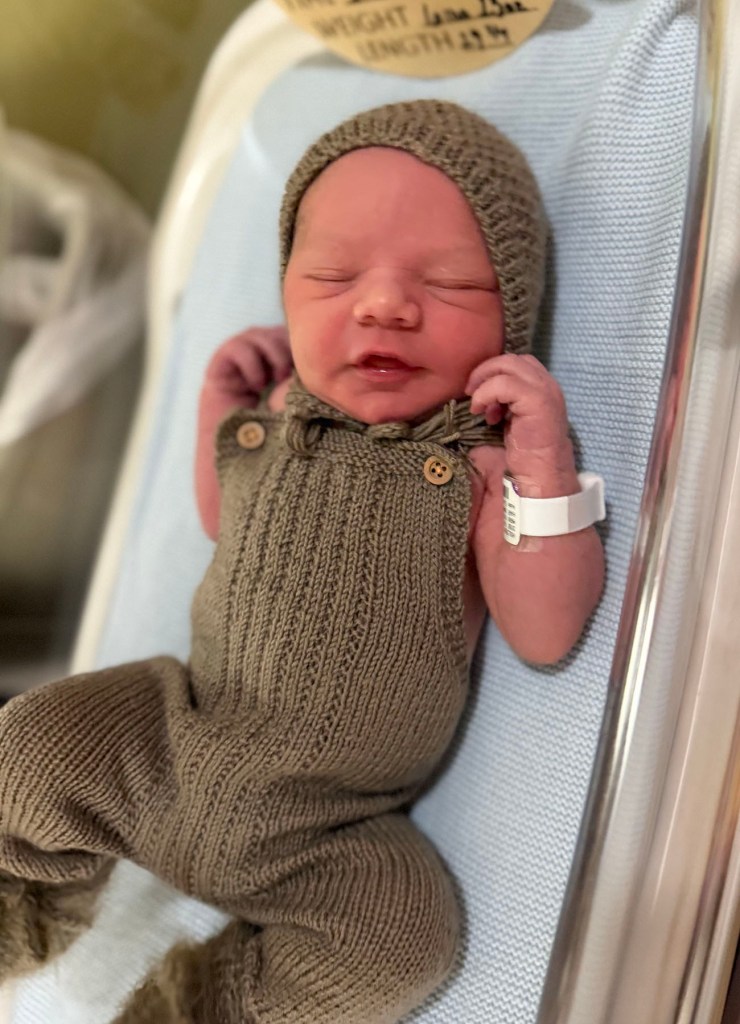
“That’s a horrible place to put a pregnant woman in,” said Holden, who on October 11 made the painful, hourlong trip to Greenville Memorial Hospital to deliver her son Tucker.
Holden lives roughly midway between Athens and Greenville, two of the nearest cities with labor and delivery units. Owing partly to Medicaid cuts from President Donald Trump’s One Big Beautiful Bill Act, St. Mary’s Sacred Heart Hospital in Lavonia stopped providing obstetric services nearly a year ago. Its closure is part of a trend touching rural communities nationwide. From South Dakota to Alabama and from Ohio to California, low Medicaid reimbursement and dwindling birth rates are pushing hospitals to shutter these services. Today, fewer than half of rural hospitals offer labor and delivery services.
In Georgia, only 36 percent of rural hospitals have a labor and delivery unit, and four have closed since 2020, according to data from the Center for Healthcare Quality and Payment Reform.
To address the challenge the closings pose to patients seeking care, the state — which ranks among the worst in the nation for maternal health outcomes — has turned to federal money from the $50 billion Rural Health Transformation Program. This fund was created by congressional Republicans to offset concerns about the outsize fallout Trump’s signature legislation would have in rural communities.
More than $12 million — out of the nearly $219 million approved for Georgia in the program’s first year — will be allocated toward placing obstetric carts in 43 rural hospitals without labor and delivery units. The carts will be outfitted with supplies needed for a birth or obstetric emergency. For example, they’ll have neonatal resuscitation tools, thermal blankets, and essential medications such as oxytocin, which stimulates contractions, and magnesium sulfate, used to treat seizures in pregnant people with high blood pressure.
“The delivery carts sound fine, in theory,” said Justin Peterson, an OB-GYN who practices in southern Georgia and has seen the pressures rural health institutions face providing maternal care.
Like Holden, Peterson worries that the carts, while helpful, will put supplies in the hands of ER doctors lacking extensive obstetric experience. Instead, he wants the state to fill coverage gaps by investing more to prevent the closure of labor and delivery units in rural areas.
“You’re putting a band-aid on a hemorrhage,” he said.

Can’t practice scared
Brittany Mitchell was about seven months pregnant when Sacred Heart’s labor and delivery unit closed. She was reassigned to an OB-GYN in Athens, even though the nearly 50-mile drive from Lavonia was stressful and inconvenient.
That OB-GYN wanted to see Mitchell weekly after finding high levels of protein in her urine — a warning sign of preeclampsia, which can cause organ damage, seizures, and other complications. To make it to those prenatal appointments, she routinely gave up a day of work as a home health aide, a job she said already didn’t pay much.
But if Mitchell were to have another baby, she said, she’d still prefer to drive to Athens to see an OB-GYN than be treated by an ER doctor. When she had her first child nine years ago, the local OB-GYN had to act quickly when her daughter briefly lost oxygen.
“If they were in that situation,” she wondered of ER doctors, “would they know how to do all that?”
In written responses to KFF Health News, Lauren Williams, director of communications for the Georgia Department of Community Health, said that training ER doctors is the main goal of the obstetric cart initiative. The rollout will include simulation drills, during which ER doctors will practice high-risk procedures.
The carts are expected to be deployed to the participating hospitals by year’s end, and their staffs will be trained to use and maintain them, according to the plan.
The concept of obstetric carts is great, said Justin Law, an emergency doctor with SouthlandMD, a physician-owned and -operated healthcare management and staffing company. Most items planned for the carts are already available in ERs. But having them in one organized spot will be helpful, he said.
Still, while ER doctors are more frequently positioned at the front lines as labor and delivery closures persist, Law and other advocates argue that they shouldn’t be used as a stopgap in obstetric care.
In the decade he’s worked across rural Georgia, Law said, he’s never delivered a baby in the ER even though he’s trained in emergency obstetrics and has experience delivering babies as a paramedic. When a mother needs an emergency cesarean section or has another high-risk complication, she would likely be transferred to a hospital with labor and delivery capabilities, Law said.
Holden, the former obstetric nurse, said familiarity with obstetric delivery practices and procedures is essential because some complications can’t wait for a transfer. “You’re not going to save anybody’s life just because you got access to some equipment,” she said.
Robin Clyatt, maternal health community outreach coordinator for Hope for Georgia Moms, said ER doctors have vast knowledge. But they might see someone with a major maternal health complication, such as a hemorrhage, only a few times a year, and therefore may lack the skills to act immediately, she said.
“You can’t practice scared when it comes to obstetrics,” Clyatt said. “And that’s important, because when you practice scared, you do stupid things.”

Ways to keep access
The labor and delivery unit at the Coffee Regional Medical Center in Douglas serves six counties in southern Georgia. The number of live births there increased from 551 in 2020 to nearly 1,000 in 2024, which shows the impact when nearby facilities close, said Peterson, who practices at the Coffee Regional Hospital Women’s Center.
While he understands that hospitals must consider their bottom lines, business decisions in recent years have often taken precedence over patient care, he said.
“They just say, ‘Oh, you know, the numbers aren’t there. We’re closing,’” he said, adding that when rural labor and delivery units shutter, the chance they’ll reopen is small.
Mark Ralston, public relations manager for St. Mary’s Health Care System, which owns Sacred Heart, did not respond to multiple requests to further discuss the unit’s closure. But in its announcement, the system said the decision followed “an extensive 18-month discernment process that included intensive efforts to recruit additional physicians, create new partnerships, and pursue incremental funding sources.”
Nationwide, states are attempting to narrow gaps in maternal healthcare using federal funds. South Dakota will establish maternal health hubs to determine where resources are needed and help mothers navigate the health system. Ohio is establishing birth centers in rural communities.
In its proposal for federal rural transformation money, Georgia included incentives such as funding 75 new residency slots in various specialties and creating a grant program that would reimburse physicians up to $250,000 in relocation fees if they chose to practice in rural areas.
State legislators could incentivize doctors to stay in rural areas, offer higher reimbursement rates for hospitals, and provide loan forgiveness for physicians, Peterson said. Communities should also look to incorporate certified midwives and community health workers, Holden and Clyatt said, though state law makes it difficult for both groups to practice. Currently, certified nurse midwives are allowed to practice only in partnership with a physician, which maternal health advocates argue creates a steep financial burden.
Holden had the ability to send her vitals to her doctor and meet with them virtually for prenatal care.
As she adorned bookshelves in baby Tucker’s cozy, sage-green nursery with vintage trinkets and family heirlooms, she said she thought of less-resourced mothers in the area, who may be on Medicaid or not have the luxury to travel an hour for a prenatal appointment.
Holden worries that without prenatal care, conditions like preeclampsia could go undiagnosed more often. “They don’t make it, and their baby doesn’t make it, because they never got that diagnosed and managed,” she said.
People like to remain optimistic that everything will go as planned, but “there are so many things that can go wrong,” she said. “And they can go wrong really quick.”
KFF Health News is a national newsroom that produces in-depth journalism about health issues and is one of the core operating programs at KFF — the independent source for health policy research, polling, and journalism.