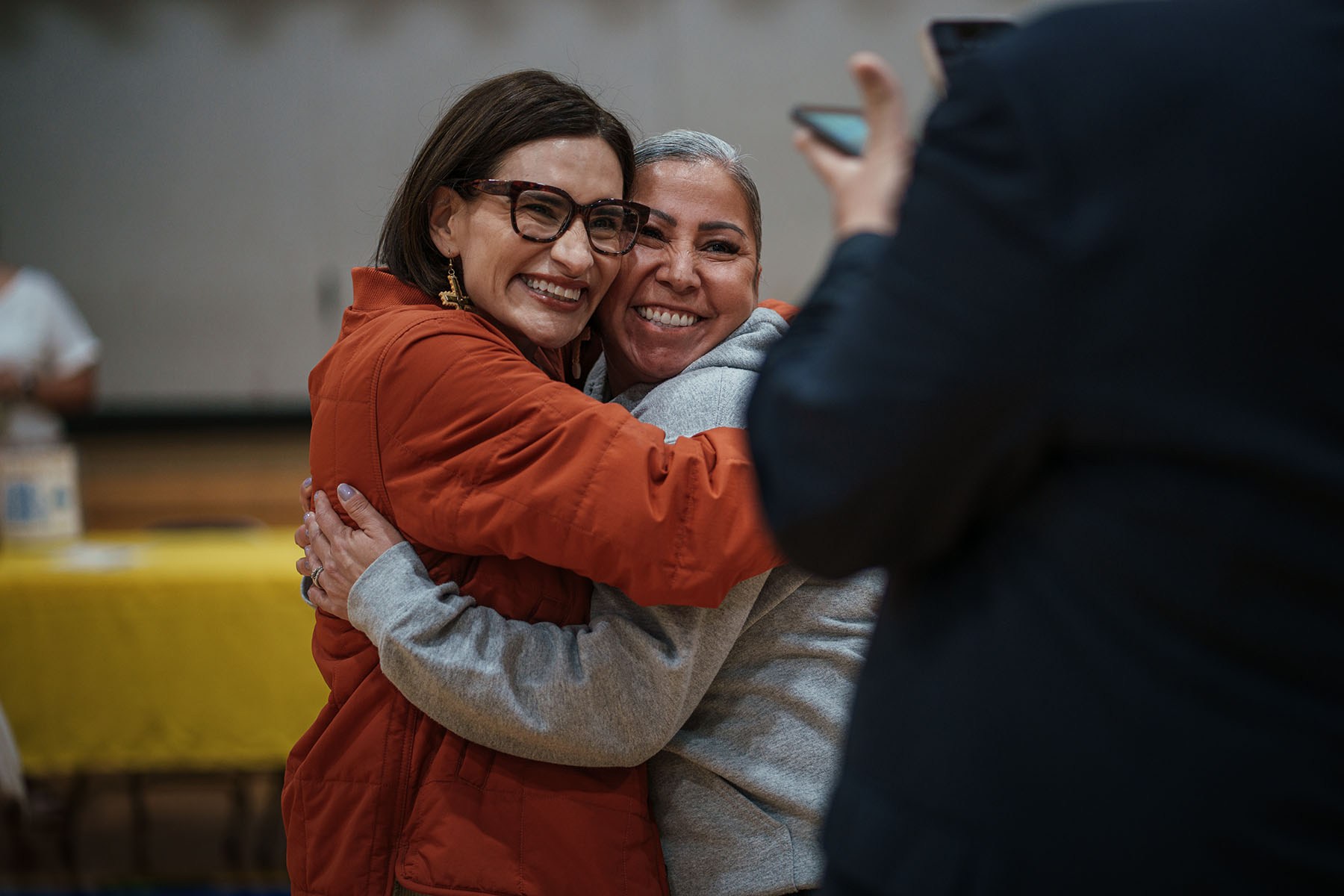
Native American women have secured two historic firsts on Tuesday. Democrat Deb Haaland is projected to become the first Native woman governor after winning her race in New Mexico, and Democrat Peggy Flanagan is set to become the first Native woman to secure a U.S. Senate seat after her victory in Minnesota, according to Decision Desk HQ.
Haaland, a Laguna Pueblo member and a former secretary of the Interior, easily defeated Republican Gregg Hull. Haaland promised voters she would improve the state of public education in New Mexico and would tackle the rising cost of living, having experienced economic instability herself before launching a small salsa-making business. She is the third consecutive woman to hold the office in the state.
Voters in New Mexico also made history by marking the first time a state has elected two women of color to New Mexico’s top jobs: Stephanie Garcia Richard will serve as Haaland’s lieutenant governor; previously, she was the first woman and first Latina to be elected as the state’s commissioner of public lands.
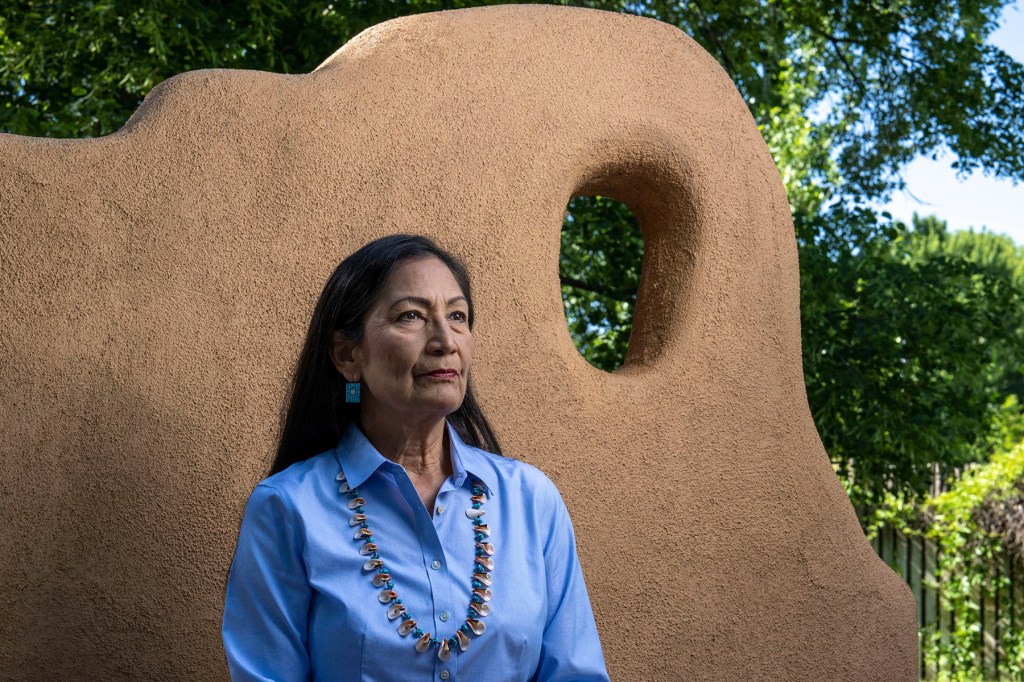
Flanagan, Minnesota’s lieutenant governor, is Ojibwe and a member of the White Earth Nation. She won her race after a closely fought primary where she faced questions about whether her progressive bona fides would sink Democrats’ chances at holding onto the seat. Flanagan has promised voters that she will address rising costs and corruption.
She defeated Republican Michele Tafoya, a sportscaster and talk show host, who campaigned heavily on the state’s $9 billion welfare fraud scandal, blaming Democrats for a lack of oversight and promising to back legislation to deport immigrants convicted of fraud and force states to implement “anti-fraud” measures. She also promised to be a “tough-on-crime” voice in Congress and to protect Trump-era tax cuts. Tafoya would have been the first Hispanic senator from Minnesota and the first Republican woman to represent the state in the Senate.
“Our democracy functions best when it accurately reflects the people it seeks to represent, and so having a Native American woman serving in the U.S. Senate is good for our democracy,” Flanagan said in an interview with The 19th. In their time in public office, both Flanagan and Haaland made strides to address the epidemic of violence facing Native Americans, particularly women.
In Alaska, a hyper-competitive race for an open U.S. Senate seat could return former Rep. Mary Peltola, the first Alaska Native elected to Congress, back to Washington. She, too, would make Senate history alongside Flanagan by bringing representation for Native American women to the chamber.

Native American women make up about 1.5 percent of the U.S. population. To reach equitable representation in Congress, voters would need to elect at least seven Native American women. Rep. Sharice Davids of Kansas, a member of the Ho-Chunk Nation, was the only Native woman serving in the last legislative session. She is projected to win her race to serve for a fifth term, according to Decision Desk HQ. First elected in 2018, she is the longest-serving Native woman in Congress. She is also the first openly LGBTQ+ Native person to hold a legislative seat.
She’ll be joined by Claire Valdez of the Ysleta Del Sur Pueblo. The democratic socialist, who was endorsed by New York Mayor Zohran Mamdani, is projected to win her election to represent New York’s 7th Congressional District according to Decision Desk HQ. She’s the first Native woman to represent the state.
N’kiyla “Jasmine” Thomas, of the Chickasaw Nation, lost her U.S. Senate race in Oklahoma. The democratic socialist beat out a moderate in the primaries but had a long shot of winning the seat. The Cook Political Report rated the race as solidly Republican. Oklahoma has never elected a woman to serve in the U.S. Senate, according to the Center for American Women and Politics.
While far from seeing parity in representation, Indigenous women are winning elections at higher rates than ever, according to data provided by Advance National Political Leadership and Indian Country Today, a nonprofit news outlet.
The organizations’ most recent data finds that the number of Indigenous candidates grew to a historic high this year, with at least 355 Native candidates running for local, state and federal office. Half of these candidates were women, 47 percent were men and 3 percent identified as trans, two-spirit or nonbinary. In 2024, Native women made up a majority of the 253 candidates. They represented 53 percent of all candidates who won their races.