
Abortion gets the silent treatment at the RNC
A slew of Republican senators who oppose abortion didn’t mention it while on stage in Milwaukee, nor did nominees Donald Trump and JD Vance — but it’s still in the party’s official platform.

A slew of Republican senators who oppose abortion didn’t mention it while on stage in Milwaukee, nor did nominees Donald Trump and JD Vance — but it’s still in the party’s official platform.
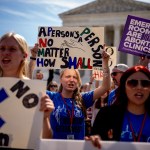
Republicans have adopted a slate of policy positions ahead of next week’s convention that does not call for a federal legislative abortion ban, but opens the door to establishing fetal personhood.
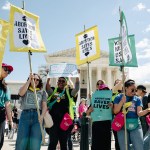
The high court had been asked to decide if Idaho’s strict abortion ban trumps EMTALA, a federal law requiring hospitals to provide stabilizing care — which can include abortions.

Abortion has become more diffuse, thanks to the rise of telehealth and abortion pills. Both are under fire in the courts and state legislatures.
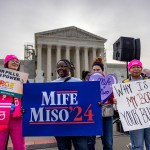
In a 9-0 ruling, the high court shot down a challenge to the FDA’s approval of mifepristone, allowing the drug to continue to be prescribed online.

A challenge brought by patients and doctors argued that the state’s strict laws endanger the lives of people whose pregnancies develop serious complications.

A recent law in Louisiana highlights the effort to block access to mifepristone even as the Supreme Court considers a case that could restrict its use.

A letter signed by physicians from all 50 states asks the high court to uphold a federal law called EMTALA, which is being challenged by the state of Idaho.

This excerpt from “Undue Burden: Life and Death Decisions in a Post-Roe America” by The 19th’s Shefali Luthra looks at just how far away abortion can be in some parts of the country.

With fewer patients, clinics have to scale back, pivot or close. Ballot measures this November could restore abortion access — but may come too late.