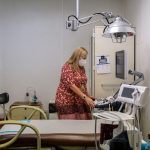
Abortion providers are trying to open new clinics as close as possible to states with bans
Providers hope the new clinics can help serve the surge of patients now expected to travel for abortions.

Providers hope the new clinics can help serve the surge of patients now expected to travel for abortions.

The order comes two weeks after the Supreme Court struck down Roe v. Wade, allowing states to ban abortion.

With Roe v. Wade overturned, it’s not clear whether unrepealed abortion restrictions can legally be enforced. But they’re blocking abortion access anyway.

A Montana abortion provider decided to limit what kinds of abortions it offers out-of-state patients. It could foreshadow similar moves elsewhere.

In the legal chaos following the fall of Roe v. Wade, clinics in Texas, Louisiana and Utah have resumed offering services while courts weigh the legality of those bans. Now, clinics are trying to provide as much care as they can.

Traveling out of state for an abortion was already unaffordable for many. But the end of federal abortion rights has come as inflation rates are pushing up prices for gas, hotels, plane tickets, medical supplies and food.

Health and Human Services Secretary Xavier Becerra declined to say whether the department would take legal action to preserve access to mifepristone.

The administration may try to “preempt” state laws banning medication abortions, officials suggested.

The court’s majority and concurring opinion preview a debate over protections such as the right to marriage equality, contraception, interracial marriage and same-sex relations.

Thirteen states have trigger laws that would immediately, or almost immediately, ban abortion now that the Supreme Court has overturned Roe v. Wade.