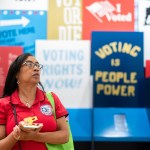
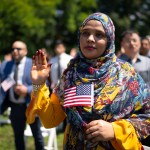
Immigration is expected to be a big topic during Thursday’s debate. Among the viewers will be immigrant women, who are becoming eligible voters at a higher rate than men.

Ahead of a consequential election, our newsroom is making a renewed commitment to writing about voting rights and the people who make our democracy function. Here’s how we plan to do that as part of our participation in the Advancing Democracy Fellowship.
Immigration is expected to be a big topic during Thursday’s debate. Among the viewers will be immigrant women, who are becoming eligible voters at a higher rate than men.

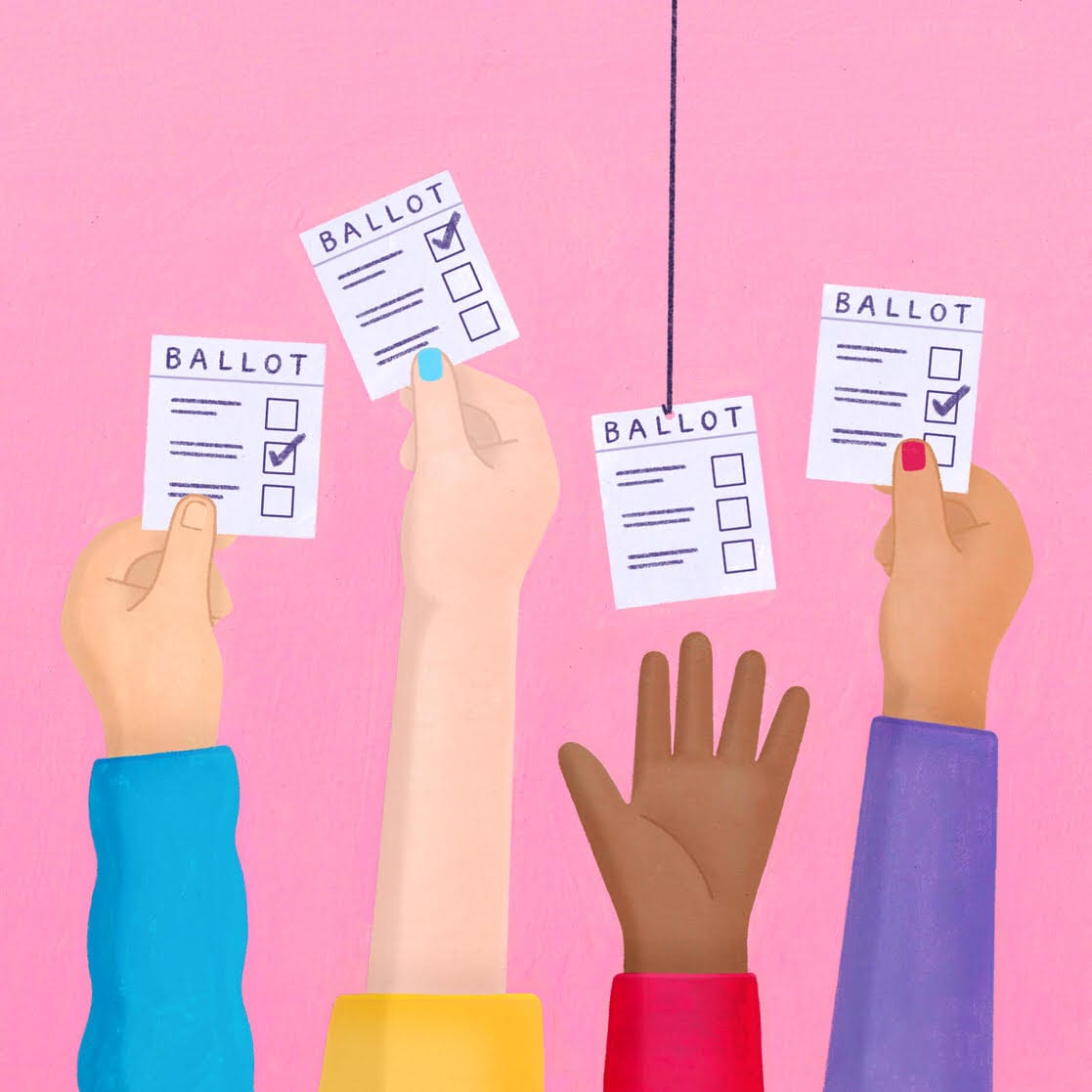
In her new nonfiction graphic book, Caitlin Cass unpacks the active role that some White women played in suppressing voting rights for all — and the lessons today in the ongoing fight for universal ballot access.
Here are our plans in this pivotal election as part of our participation in the Advancing Democracy Fellowship.
Facing a 'new reality' in their work on the frontlines of defending democracy, election administrators — predominantly women — remain cautiously optimistic that they can meet the moment.
Without voting policy on the state and federal level, experts are concerned about big ramifications for how voters will be able to weigh in on issues like abortion, the economy and gun violence.
Advocates of ranked-choice voting say it helps women and people of color candidates participate in a more democratic election system. It’s part of why they see efforts to squash it as so alarming.
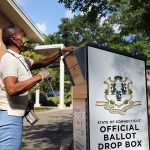
Stephanie Thomas, the first Black woman to be Connecticut’s secretary of state, has several priorities this year, including sorting out the specifics of how voters can get to the ballot box before Election Day.
A new “democracy caucus” aims to expand access to voting, part of a movement in statehouses to counter election deniers.
Since the 2020 election, our voting systems have been the subject of conspiracy theories. But the people who make it function say they want everyone to see the guardrails and have faith.