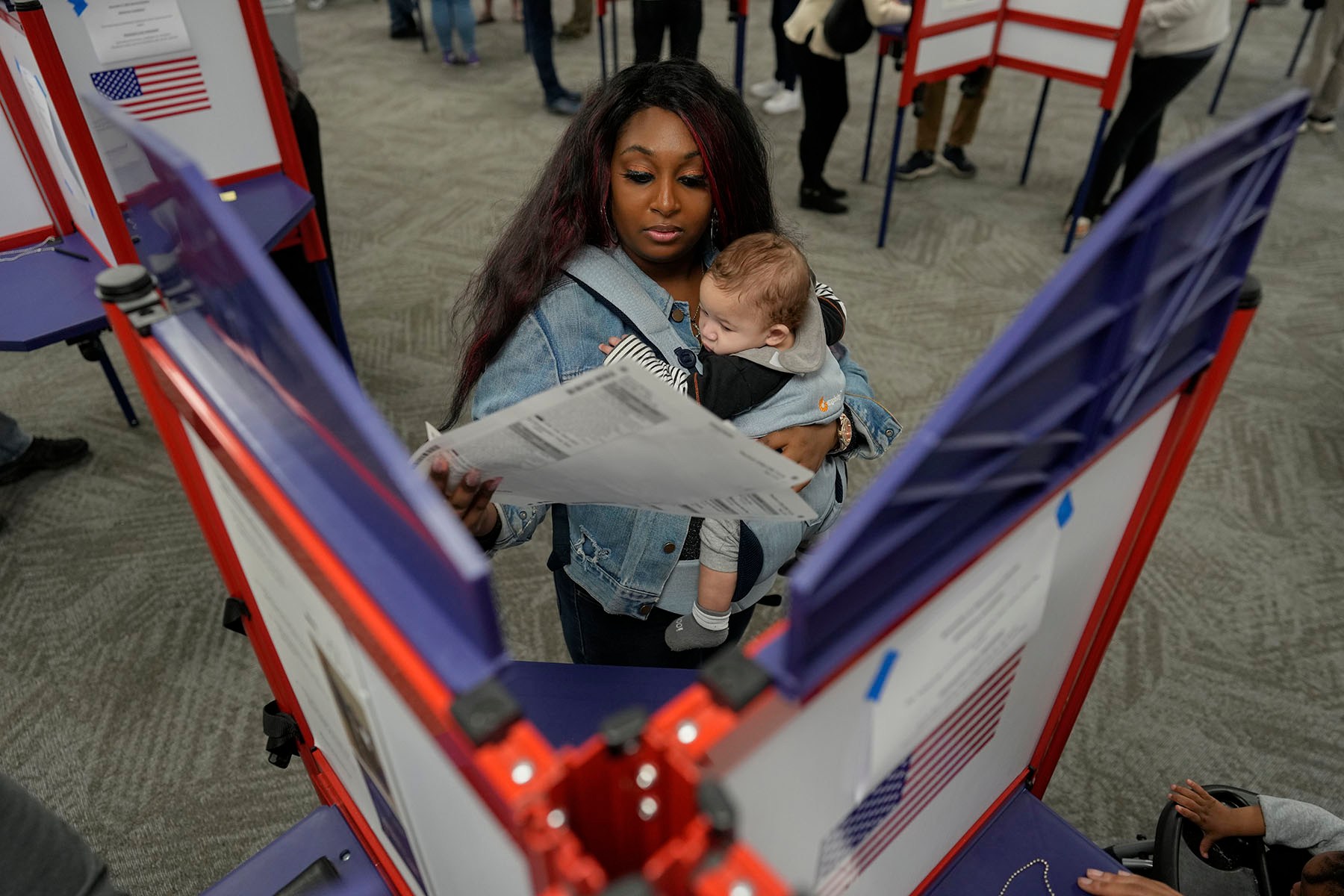
Election Day is November 3, but Americans have been weighing in on races up and down the ballot for weeks.
That’s because most states offer some form of early voting, either in person or by mail, and eligible voters are taking advantage.
Here’s what you need to know about casting your ballot and what to expect after polls close.
What do I need to know to cast a ballot?
Every state has a different set of laws and rules outlining how and when residents can vote.
- Are you registered to vote, and is your home address up to date? Some states allow people to register to vote up through Election Day; in others, deadlines have passed. If you’re not sure, check the deadlines in your state.
- If you’re voting by mail, check to see if the deadline for requesting a ballot has passed.
- If you haven’t already mailed back your completed ballot, here are your state-specific options for returning it.
- If you’re voting in person, do you know where your polling place is located? It may have moved since the last election.
- Do you need identification to vote?
- Are you prepared to wait several hours in line if there is high voter turnout?
States have election-related websites, often through the secretary of state’s office, with information on what eligible voters need to know.
How will I know if my vote was counted?
If you voted early, most states allow you to track your ballot. Some states will also notify voters if there is an error on their ballot, giving them time to fix or “cure” their ballots.
What are my rights on Election Day?
Voting advocacy organizations recommend that eligible voters know their legal rights when casting a ballot.
- If you’re in line to vote on Election Day and the polls close, stay in line. You still have a right to cast a ballot.
- If you make a mistake while filling out your ballot, you can request a new one.
- If a voting machine is down when you’re preparing to cast a ballot, you can request a paper ballot.
- There are several scenarios where you might request a provisional ballot.
- If you face a problem or have a question, call the national, nonpartisan group Election Protection at their hotline (1-866-OUR-VOTE / 1-866-687-8683).
How are ballots counted?
It can take a while in some states for all ballots to be counted.
- States have different rules for when they can process ballots. Some have to wait until Election Day to start processing them, while others can start as soon as they receive them. No results are released until after polls close.
- If a race is close, more votes must be counted to determine a winner. Sometimes that includes provisional ballots — which voters fill out if there is a problem with their registration on Election Day — and that can add more time.
- States also have different deadlines for mail-in ballots. In some states, the deadline to receive mail-in ballots is Election Day, while in others, those ballots just have to be postmarked by Election Day.
The fact that states have different rules and deadlines for administering elections — which can mean election results are released at different times on election night and afterward — is not a sign of voter suppression or fraud.
How do we know who won?
There is no nationwide entity that collects and releases election results in America. But many media outlets gather data on vote counts and project the winners of elections. Teams of journalists use election results data as it comes in, as well as information from past elections to project who won a given election. Not all ballots need to be counted or even received for these projections to be made.
The 19th is again relying on Decision Desk HQ to project the winners of this year’s elections. Decision Desk says it considers a number of factors in making calls, including how much of the vote has yet to be counted, where votes are coming from, and what types of votes (absentee, early, day of) are being reported.
Major media networks have their own teams that project winners. Many news outlets also rely on the Associated Press, which outlined its race-calling process here.
Even after a major media network projects a winner, election officials continue to count ballots in a process that can take days or weeks. Additional election officials, often in some local or county capacity, then certify those results.