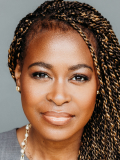
In the lead-up to our country’s 250th anniversary, Errin Haines is writing a series of columns to contemplate the complicated expansion of our democracy. Subscribe to The Amendment newsletter.
It is not lost on me as a Black woman, as we approach the United States’ 250th birthday, that I am writing about a democracy I would not have been considered a part of as it was declared by our original founders. Because I believe the work of the American Revolution is ongoing, I have considered what it might look like to include those initially left out of our origin story.
What united us in 1776 was the idea that a country can be defined not by territory or identity, but by a shared belief that freedom and equality are human rights. What must bring us together now is a commitment to making that idea real for all of us. Without belonging, there can be no true democracy. This moment requires us to affirm that commitment. It is in this spirit that I offer a new declaration.
Declaration of Belonging
Adopted July 4, 2026, on the 250th Anniversary of the United States
When a people long denied full dignity and democracy speak in unison, it becomes necessary to demand the truth: about who we are, who we can be and who we refuse to be any longer.
We declare this as an act of repair — not to dissolve our political bonds, but to remake them in the image of equity and belonging.
We address this declaration to the nation we have built, defended, challenged and reimagined, often without recognition, in an age of erasure and exclusion.
What does it mean to be revolutionary today?
As the nation marks its 250th year, The 19th is asking a central question: What does it mean to be revolutionary today — and who should we recognize as the revolutionaries still fighting to have that question answered on equal terms? Explore this series.
We do this on behalf of those who have carried this country forward: women, men and people across the gender spectrum; the descendants of the enslaved and the survivors of colonization; Indigenous people, who are the original inhabitants of this land, and immigrants who choose to make America their home; disabled people; caregivers and caretakers; workers and dreamers.
We were excluded from our founding, but we were never absent from the story. Today, we declare our belonging as a necessary step in the unfinished work of freedom and of a truly representative democracy.
We hold these truths to be made, not given:
That all people are created equal.
That our humanity is not conditional — not on wealth, whiteness, gender or citizenship.
That freedom must include safety, dignity and sovereignty.
That democracy is only real when it is shaped by and applied to all of us.
That governments derive their legitimacy only when they protect the rights of all, not some.
When power is limited, rights are denied and truth is silenced, it is not only the right, but the duty of the people to demand more and to build better.
We therefore name the abuses that have brought us here:
- the criminalization and mass incarceration of Black and Brown communities;
- the forced removal and cultural erasure of Indigenous peoples;
- the denial of bodily autonomy and reproductive justice;
- the exclusion of women and nonbinary people from equal pay, power and safety;
- the suppression of voting rights;
- the erosion of civil rights under the pretense of progress;
- the neglect of disabled people and their access to leadership and humanity;
- the surveillance and harassment of immigrants, organizers and those targeted because of who they are and how they speak;
- the systemic underfunding of education and healthcare;
- the violence of persistent poverty in a nation of extreme wealth.
A nation that celebrates freedom while enabling its denial, that claims equality while legislating exclusion, remains separate and unequal.
A nation that renders Black women invisible ignores a fundamental truth: Black women are essential to realizing a more perfect union.
We make these claims after generations who have marched, written, voted, protested, served and sacrificed for a democracy that did not fully recognize them.
We have built this country’s wealth while being denied its promises.
We have defended this country while being treated as enemies within it.
We have fed its families, raised its children, healed its sick and told its stories — even as our own stories were erased.
Black women have sustained this democracy — have shaped it, expanded it and secured it.
As voters, visionaries, organizers, caregivers and truth-tellers, Black women have helped define the conditions under which freedom could be claimed, not only for ourselves, but for all.
We have done this at the intersections of race, gender, class and citizenship not as separate struggles, but as a lived reality that required us to see what others could not, and to build what did not yet exist.
And still, we show up wherever power is contested and reimagined.
The work of belonging — not representation alone, but inclusion with power — is the inheritance of Black women. And it is work that calls all of us.
We must all therefore declare, in the name of a future worthy of our ancestors and our descendants:
That freedom cannot be partial.
That equity cannot be symbolic.
That justice delayed is still justice denied.
We declare our independence and our interdependence as a people who refuse to be divided, diminished or dismissed.
We pledge to tell the truth.
We pledge to honor those who carried us.
We pledge to build systems rooted not in extraction and exclusion, but in care, repair and accountability.
We are not the original founders of this nation.
We are the perfecters of our union.
We declare:
We have always belonged.
And the work of freedom will be finished.


