This piece was copublished with Sojourners, an independent, award-winning magazine of faith, culture, and politics.
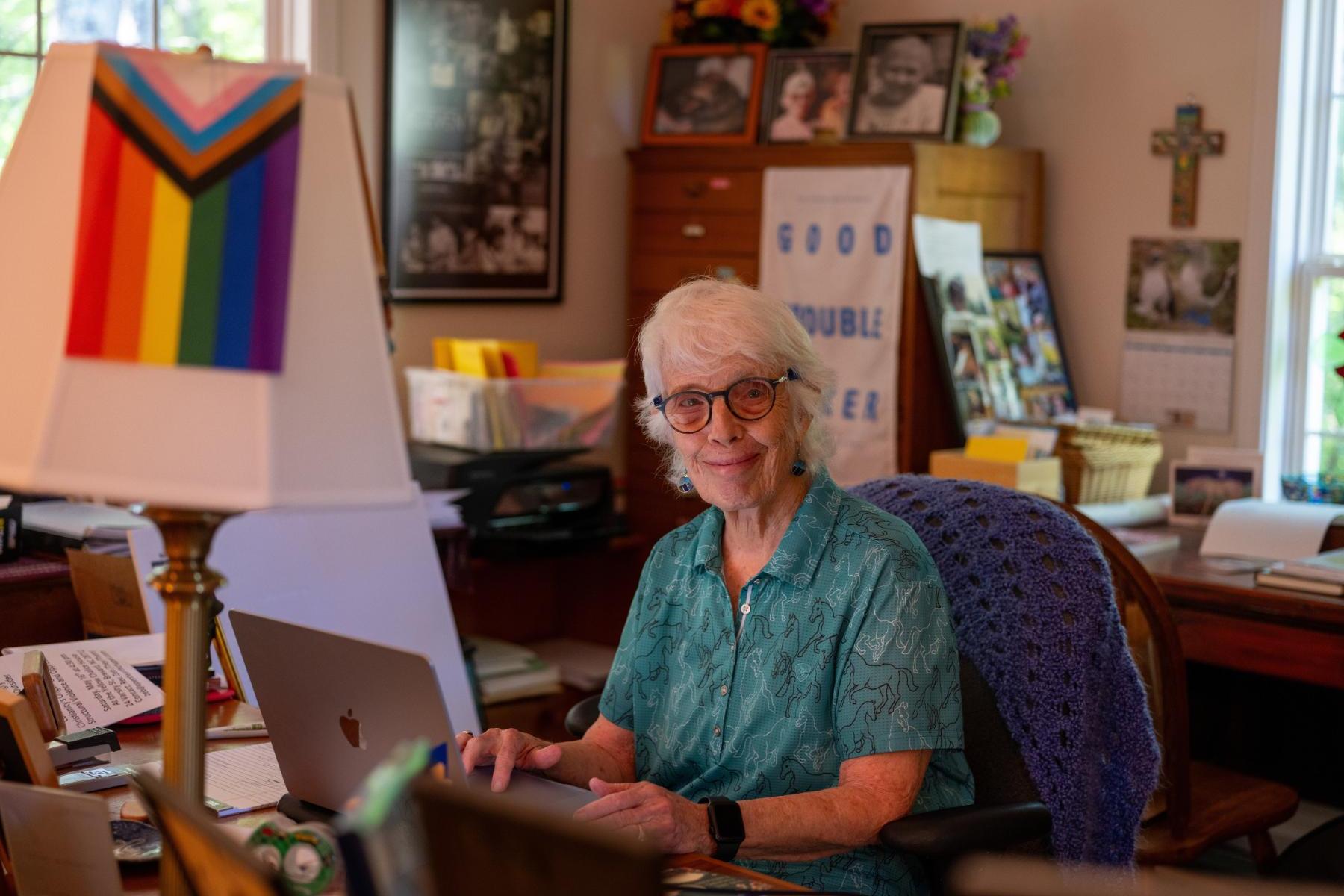
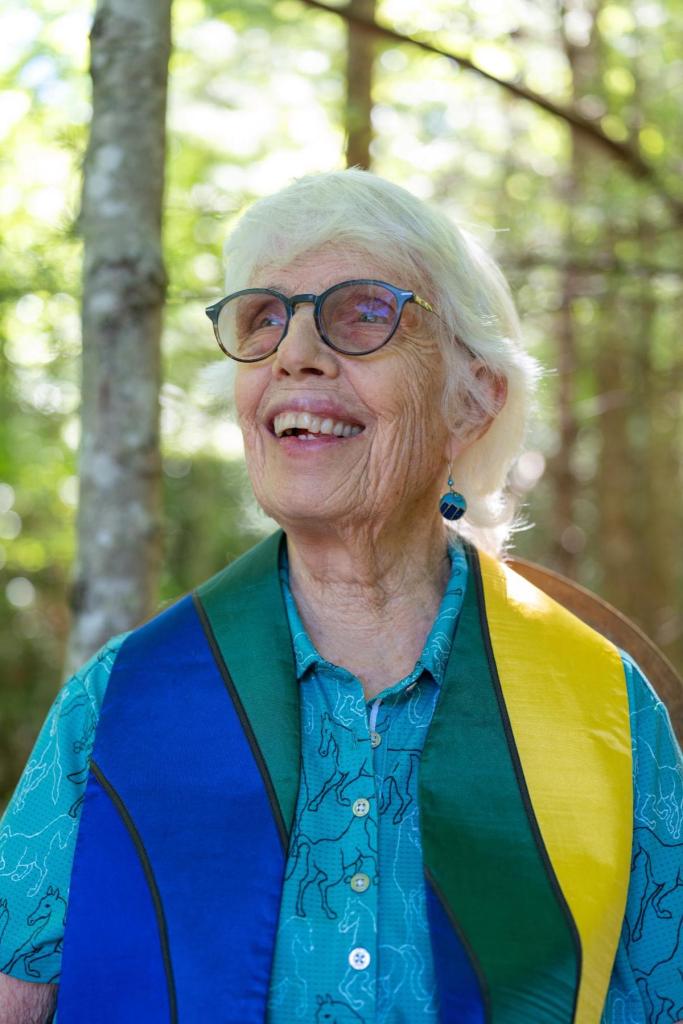
On “Moral Mondays,” a group of locals — sometimes 10, sometimes 100 — gather on the town square in Brevard, North Carolina, holding signs advocating for voting rights, economic justice and more. Carter Heyward, an Episcopal priest and vice president of the Transylvania NAACP, which organizes the events, will “often come in her collar with a bright stole on,” said Diane Livingston, an NAACP member. “That’s how I always picture her, with a clergy collar on.”
Heyward’s clergy collar and her advocacy for a more democratic society did not come easily. She was one of the first women to be ordained in the Episcopal Church in 1974. It was an “irregular” ordination: The 11 women ordained at the predominantly Black Church of the Advocate in Philadelphia, prefiguring the Episcopal Church officially ordaining women in 1976, became known as the Philadelphia Eleven.
“They called us all ‘irregular priests’ forever because of what we had done,” Heyward told Sojourners. For Heyward and the women who were ordained before the church allowed, it “set us all on a road to look at life itself that way: What do we value most, and how are we going to live out these values as priests?”
From her years of ministry and teaching, Heyward has become known as a champion of women’s rights, feminism and LGBTQ+ liberation. To Heyward, those values inform — and are informed by — her equally strong commitment to racial justice, democracy, and care for the Earth. Heyward has written or edited 18 books about theology and social justice, most recently “The Seven Deadly Sins of White Christian Nationalism.”
What does it mean to be revolutionary today?
As the nation marks its 250th year, The 19th is asking a central question: What does it mean to be revolutionary today — and who should we recognize as the revolutionaries still fighting to have that question answered on equal terms? Explore this series.
Heyward called the book the culmination of her life’s work. She wrote it after the January 6, 2021, Capitol insurrection, calling on Christians like her to defend “justice, freedom and compassion for all,” through actions to preserve democracy.
“Whether it’s white supremacy, misogyny or capitalist spirituality,” Carter said, “we need to speak about these things and start trying to generate some transformation.”
‘Do something about racism and injustice’
Heyward grew up in Hendersonville, North Carolina. From a young age, she said the North Carolina mountains taught her that God is as much in her as in the snakes that crawl across the dirt.
“I feel it in my soul — a deep connection to these Appalachian roots,” she said.
But it was the racial segregation and Jim Crow laws Heyward witnessed growing up that taught her about justice. Her family employed a Black caretaker, Bessie, who lived across town. “I couldn’t understand why she had to live on another side of town, and why, when my dad would take her home, it was clear that her house and her neighborhood was not nearly as nice as our house in our neighborhood,” Carter said. “And we lived in a very modest, working-class neighborhood.”
Racism, it became clear to Heyward, was “not God’s will.” By the time she was a young teenager in the late 1950s, she had two primary religious commitments: “to do something about racism and injustice and to make sure that we took the presence of God seriously in everybody and everything,” she said.
After a long career teaching at a divinity school in Massachusetts, Heyward moved back to North Carolina. But retirement wasn’t going to be quiet. In 2014, six Black residents and six White residents of Brevard, including Heyward, got together to form the local Transylvania NAACP chapter. Heyward has been one of the vice presidents from the beginning. Tommy Kilgore, the president of Transylvania NAACP, was one of the Black founders. Kilgore was born and raised in Brevard, where he’s worked in civil rights for decades.
He said Heyward is very active in the community — attending city council and school board meetings, often speaking about issues the NAACP cares about, such as expanding democracy and opposing nationalism. In January 2019, Heyward was one resident who spoke before the Brevard City Council opposing the display of the Confederate flag.
“She collaborated with our mayor, Maureen Copelof, on putting together Juneteenth celebrations,” he said. “She’s heavily involved and wants to be involved from a positive perspective.”
Livingston, a retired deacon in the Episcopal Church, met Heyward after joining the NAACP, where they serve on the Faith in Action committee together. Heyward “frequently uses the term justice-love,” Livingston said. “I love that she couples those two things, because that is how she seems to operate.”
“Justice-love” is a term that came from Heyward’s friend Marvin Ellison, a queer theologian who defined it as “mutual respect, commitment, and care and a fair sharing of power.”To live out of a commitment to justice-love, Heyward said, “would be my deepest prayer for myself and for any work that I do and for what the NAACP does,” she said.
Kilgore credited Heyward’s dedication to her religious convictions. He and Livingston both admire her desire to serve in a support and advisory capacity rather than taking space away from Black leadership.
Robert Griffin, the executive minister of Sunshine Cathedral in Fort Lauderdale, Florida, was Heyward’s student at the Episcopal Divinity School — as was his husband, who is also a minister. To Griffin, Heyward’s work with the NAACP is an example of how she has “always found ways to open doors for other people to walk into,” he said.
North Carolina native
Growing up, Heyward’s family went to an Episcopal church in Hendersonville. By the time she was about 6 years old, Heyward told her parents she wanted to become a priest. After graduating public high school, Heyward went to Randolph-Macon Woman’s College (now known as Randolph College) in Lynchburg, Virginia, and majored in religion. From there, she went to Union Theological Seminary in New York City where she met other women who were also seeking to shatter the glass ceiling of women’s ordination.
After her “irregular” ordination, Heyward appeared on the cover of Ms. Magazine in December 1974, smiling and wearing a bright orange and pink vestment. Above her head runs the text: “Who’s Afraid of Women Priests?”
In 1975, Heyward was hired by the Episcopal Divinity School in Cambridge, Massachusetts, where she taught theology for 30 years. Heyward came out publicly as a lesbian in 1979. She said she did so to be in solidarity with another lesbian who was seeking ordination and “was being crucified by people who did not think gays and lesbians should be ordained,” Heyward said.
Though initially her student, Griffin considers Heyward a mentor and friend. He said her justice work through Moral Mondays and being involved in the NAACP and in the Brevard community has her “in her element of doing what she really wants to do.”
“It’s amazing 20 years later to see how the things that she talked about around sexuality, ethics and justice has become a bedrock for how we teach and how we preach today,” Griffin said.
Now, Heyard’s branch of the NAACP has an LGBTQ+ working group that Heyward is part of, but younger people lead it.
“I’m happy to be there as an older person who has stories to tell, but I’m happy for younger people to set the agenda,” she said.
Navigating conversations around LGBTQ+ justice can be tricky, she said: “Some of the Black members of our community have not wanted to join the NAACP because of the presence of some openly gay and lesbian people like myself and a few others,” Heyward said. “Those of us who are out queer are white people.”
Rev. Kelly Brown Douglas, Episcopal priest and canon at the National Cathedral and Heyward’s colleague, has written about this tension in her book “Sexuality and the Black Church: A Womanist Perspective” and in other articles.
“The issue of same-sex marriages is considered a direct affront to black people’s sense of struggle, experience of oppression, and faith tradition,” Douglas wrote. A few of the factors impacting the Black Church’s reluctance to affirm LGBTQ+ relationships are related to “black people’s own historical experience with contested marriages,” she wrote, that “the black enslaved were routinely denied the privilege to marry.”
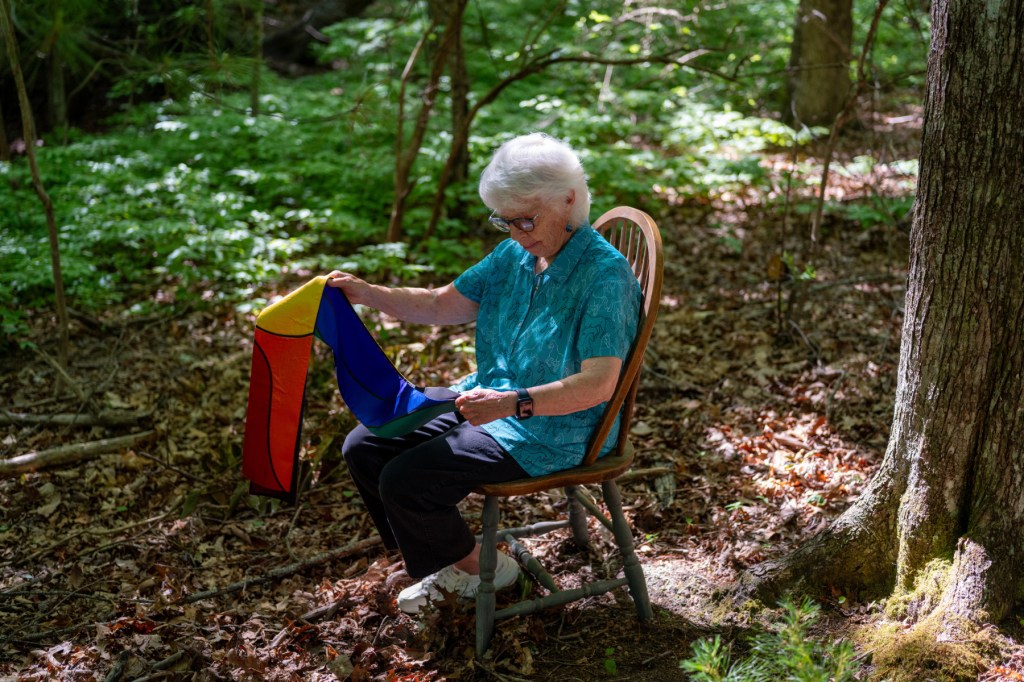
As a person “who is known by many people primarily as a white lesbian, feminist and Christian activist, that is often seen as somehow contrary to justice for Black people,” Heyward said. “My entire adult life is a banner to say, actually, they do go together. They have to go together.”
Livingston said that those who “don’t have a voice, who feel pushed down, they’re comfortable with Carter. But also the people who have power and privilege are comfortable with her, because she helps those people not forget the others. She’s a driving force in helping people be listened to, be heard.”
‘Healing and liberation’ by horseback
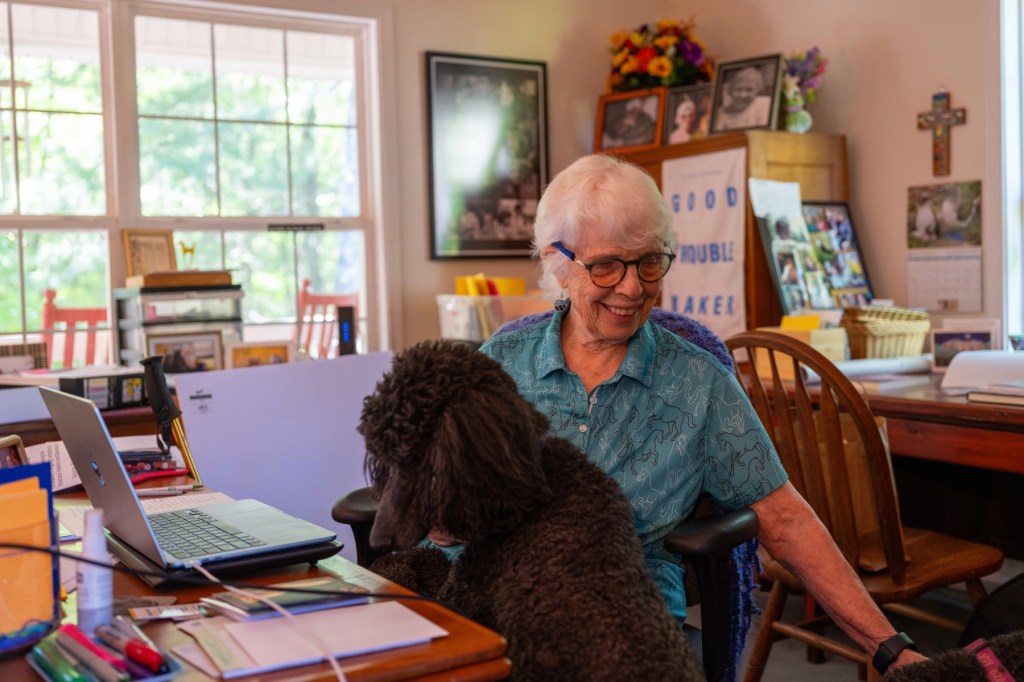
Heyward’s love of animals is a big part of who she is — her two poodles are often around during Zoom calls and strategy meetings, and soon after she moved back to North Carolina, Heyward helped found a therapeutic horseback riding center called Free Rein at stables near her house.
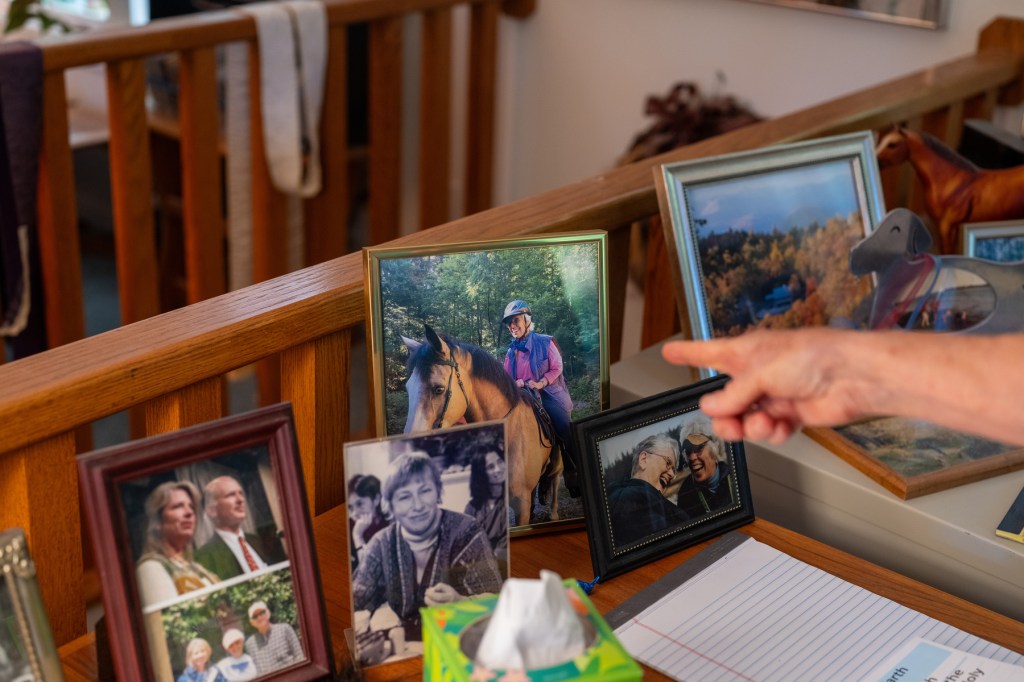
Free Rein is part of her justice work — it’s about “healing and liberation,” she said. Free Rein works mostly with disabled children and people with developmental disabilities, fundraising to subsidize costs for families who can’t afford it. Horses, to Heyward, can teach people to practice mutuality in their relationships and take joy in being embodied creatures themselves. She said she learned about justice-love from her beloved late horses Breaker, who had green eyes, and Feather. She keeps framed photos of them; they were like her best friends, she said.
Part of practicing mutuality and truth-telling in relationships, to Heyward, is to help other White Christians like herself recognize systemic injustices. As a White Southerner, she said “none of us is personally responsible for the evil of slavery, but all of us are responsible for helping undo its effects. And we ought not to let our shame or our senses of guilt ever get in the way of that. We just need to get out there and work as hard as we can against the evils of our ancestors.”
Today, part of that work is fighting for voting rights and civil rights, especially after the Supreme Court weakened the Voting Rights Act of 1965. In the NAACP, Heyward is holding lots of strategy sessions and meetings to organize how they are going to canvas to get out the vote in upcoming elections and fight for the protection of voting rights in North Carolina. Livingston said Heyward is known for her letters to the editor and sending around petitions for signatures: “She’ll go, ‘This calls for a letter.’ And she could just whip them out.”
For Heyward, Christians ought to be at the forefront of democratic efforts.
“I believe democracy is a Christian way — I also believe it’s a Jewish way — not that we should be a Christian nation, but because all people are equal,” Heyward said. “And when all people are equal, we all need to have some say in how we are governed and how we live, and that’s what a democracy is.”
In the intertwining of Christian and MAGA politics, Heyward sees an active “Christofascist realm.”
“We have to stand with each other in solidarity in order to be loving neighbors, to make justice roll down like water,” Heyward said. “I don’t wish my enemies harm, but I wish them conversion. I believe that the people who are committed to justice-love need always to save a place at the table for those who are not able to join us.”
Cassidy Klein (she/her) is a journalist, writer, editor, and former Sojourners fellow living in Chicago. Find more of her work at cassidyrklein.weebly.com.